
By Mariia Babicheva, PhD candidate in the National Interest Programme in Cultural Heritage, University of Rome Tor Vergata
Have you ever thought of historians as detectives of the past?
One of the mysteries historians often encounter is why some figures remain widely remembered while others are virtually unknown, despite having comparable output in their field. The Wolfsonian's collection preserves evidence of both—celebrated architects and those whose careers have been largely overlooked. Italian architect Mario Messina (1899–1987) is an example of the latter. Although he moved within the circles of prominent figures of Italy's architectural scene, Messina's name has been almost completely left out of the historical record, and the limited information available still leaves significant gaps in his private and professional life.
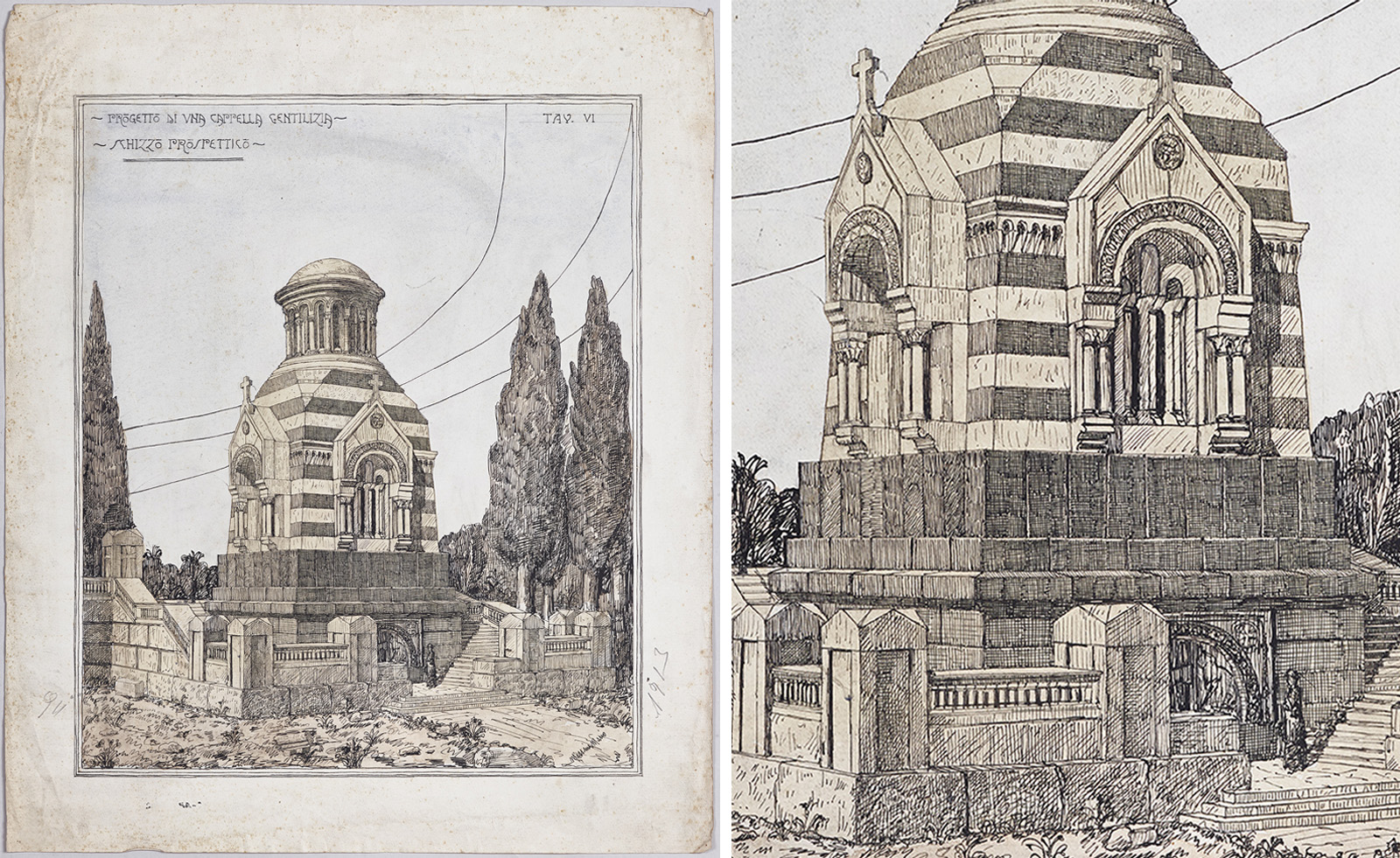
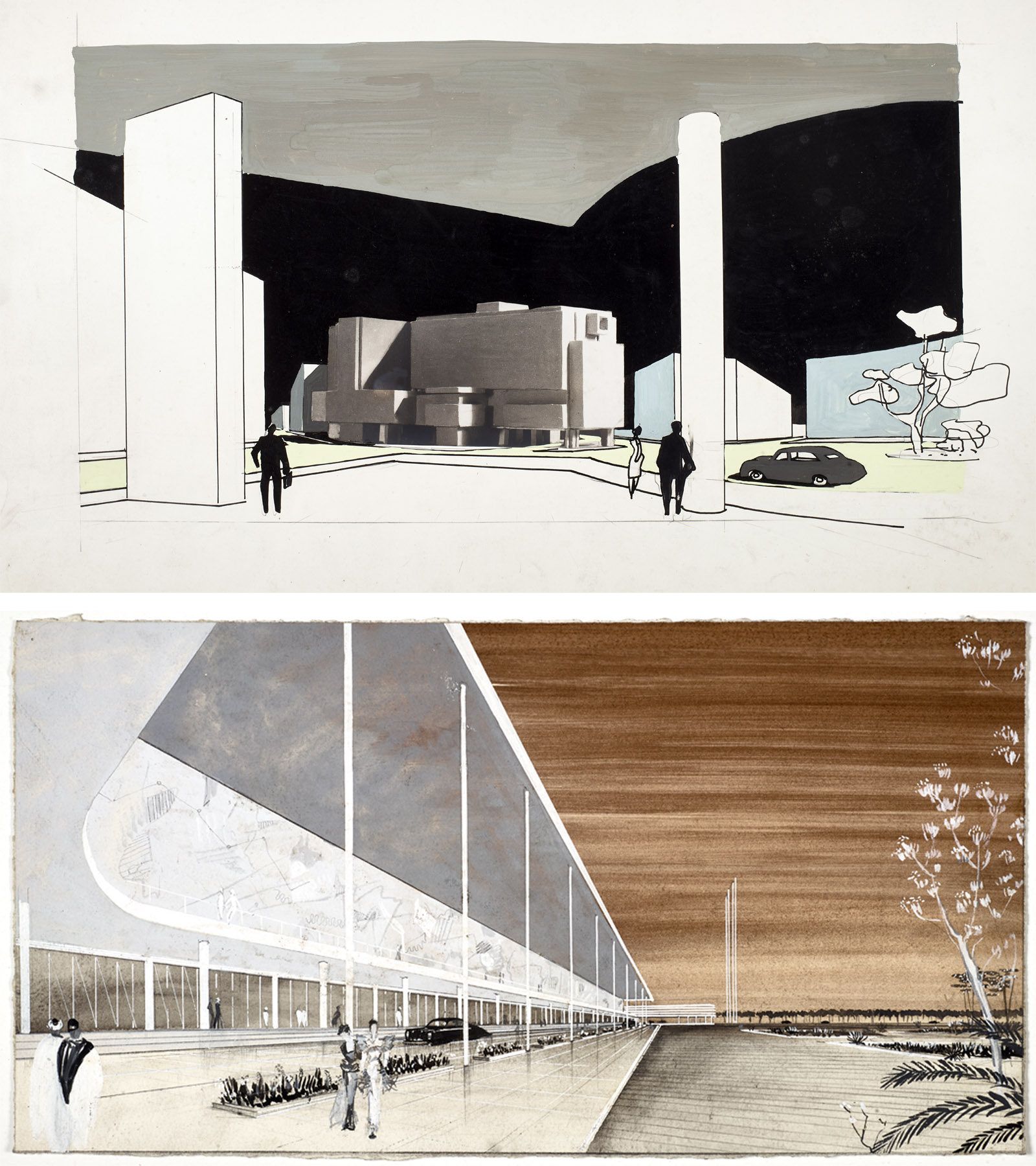
Messina's archive, now held at The Wolfsonian, is composed of around 400 items. Sketches on paper scraps, detailed illustrations, and photomontages document his activity from the 1910s to the '50s, both in Italy and abroad. They reveal an architect whose language evolved with shifting styles, from classical schemes to Italian colonial and Fascist-era exhibition architecture, and later modernist influences, especially in postwar Morocco projects.
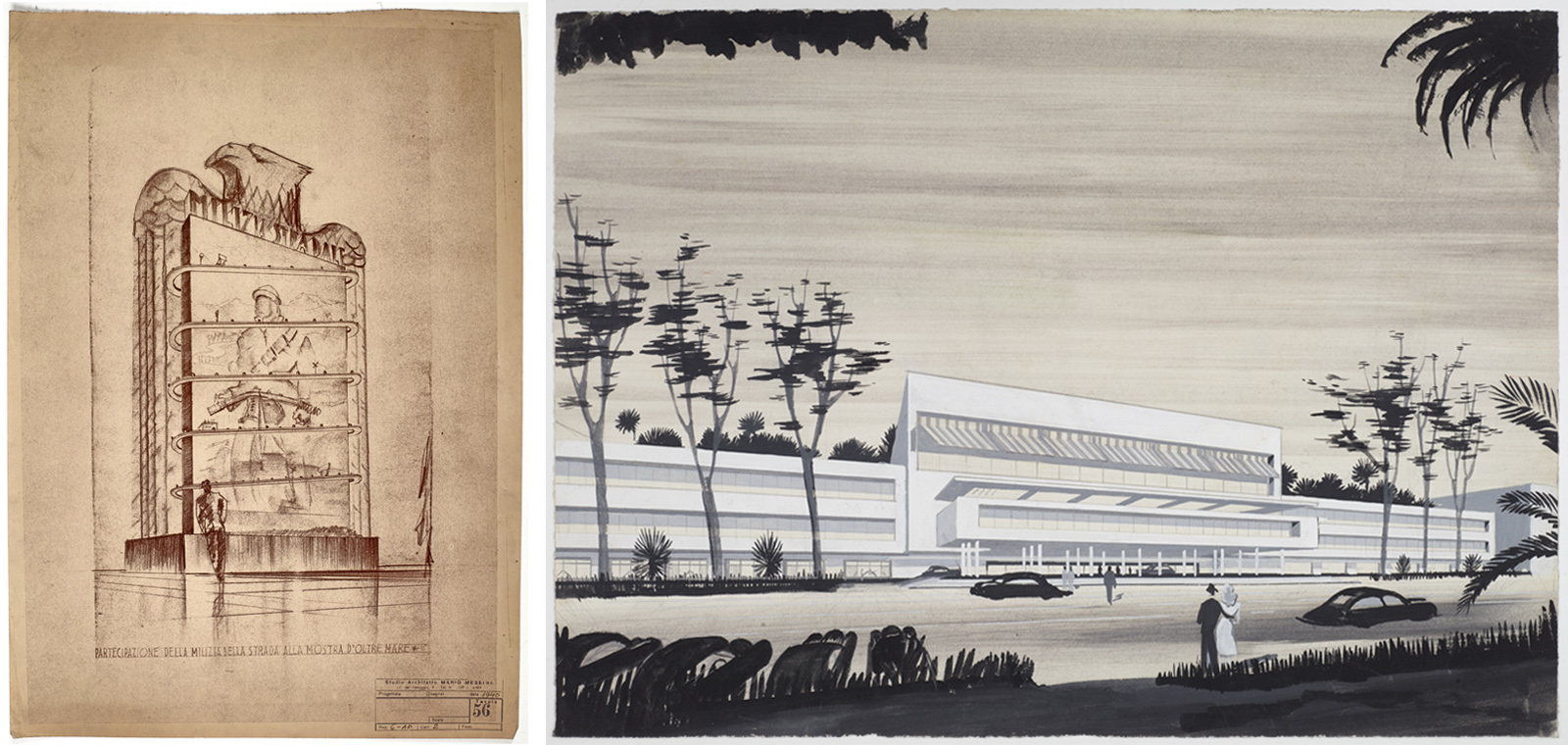
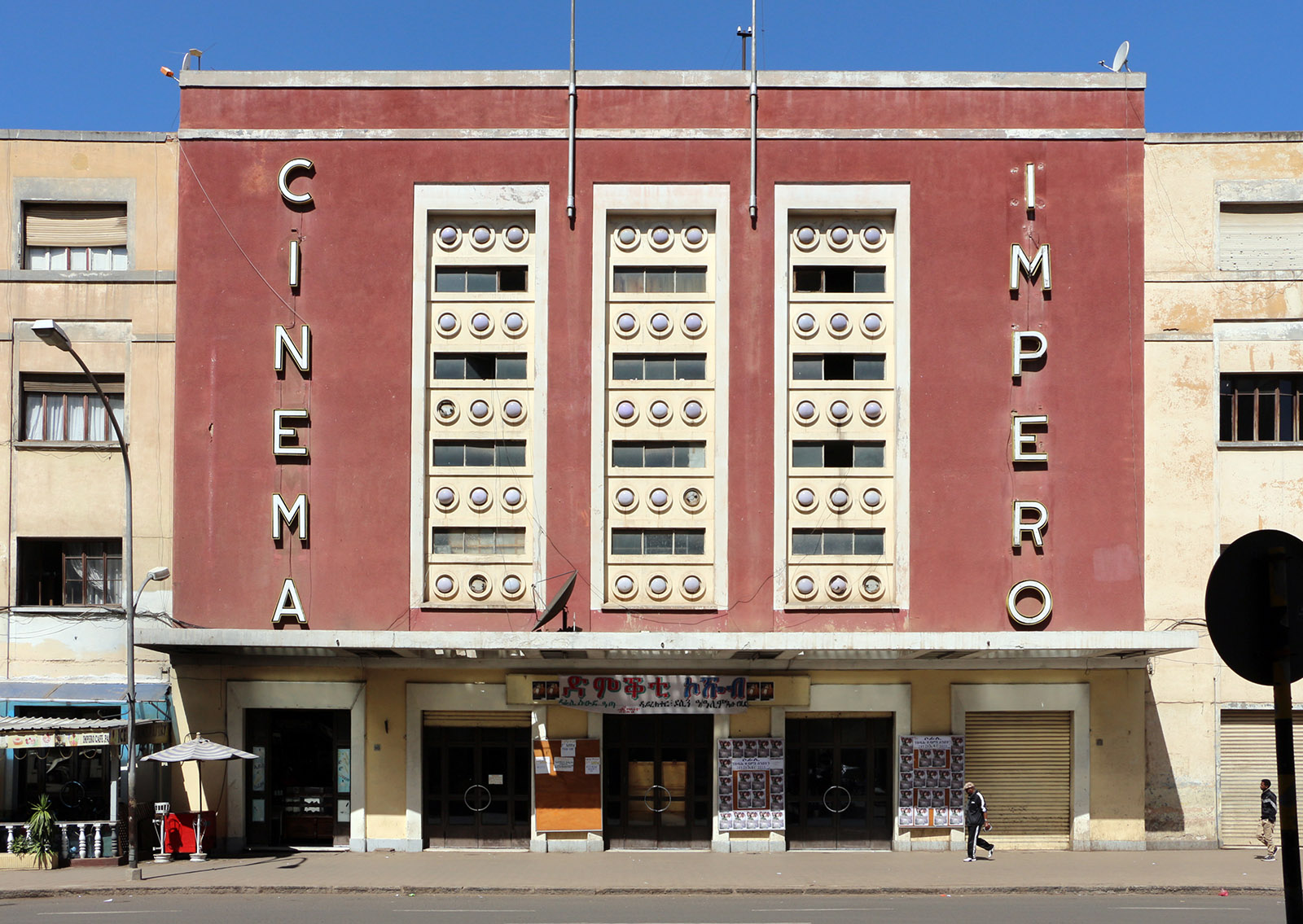
The archive, however, consists almost entirely of unbuilt projects, with only a few drawings of realized buildings. Documents about Messina's completed works—such as the famous Cinema Impero in Asmara, Eritrea—are yet to be discovered.
The Archive as Fragment
Messina's collection at The Wolfsonian is unusual in both its contents and its gaps. Where most architectural archives contain comprehensive plans, elevations, and sections—even for small details such as door handles and window frames—these are absent here. Instead, the collection consists of artistic renderings of his unrealized projects set within urban or natural landscapes.
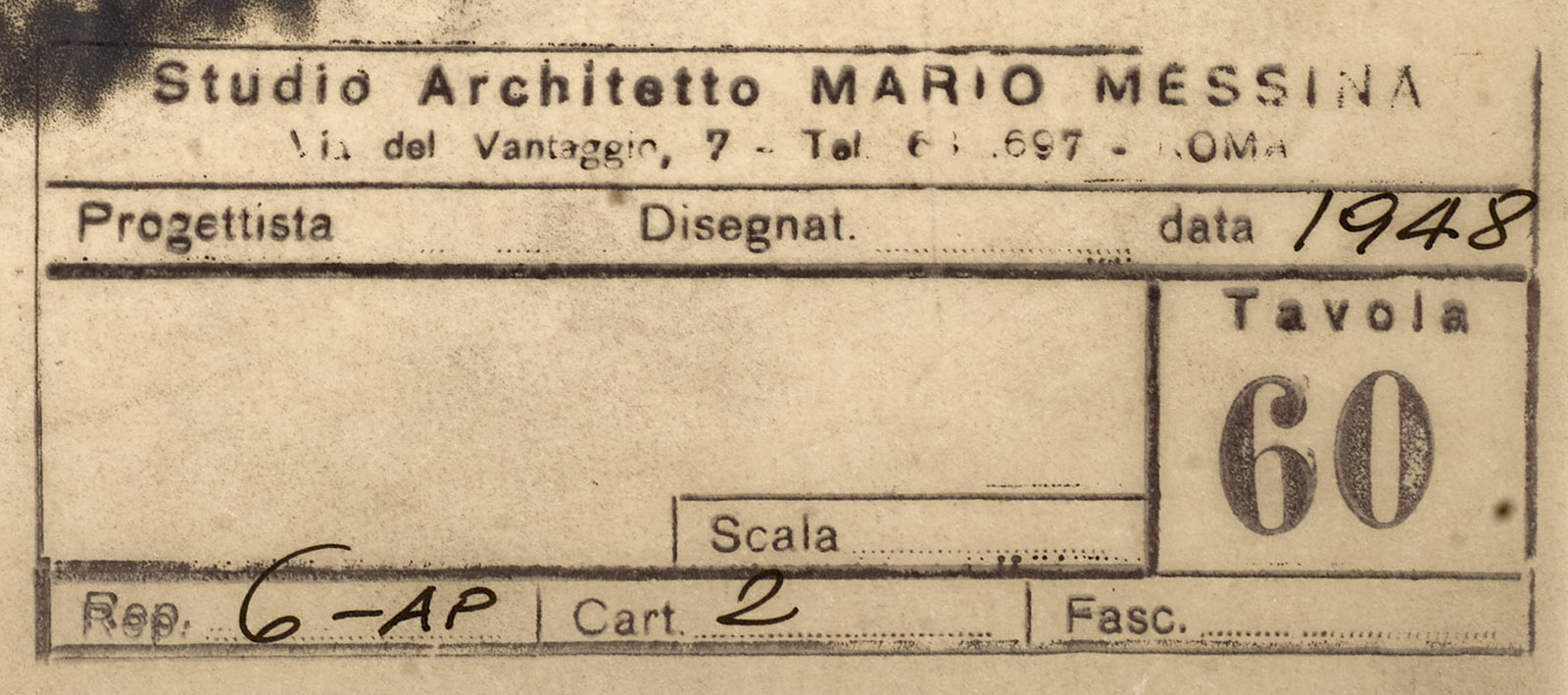
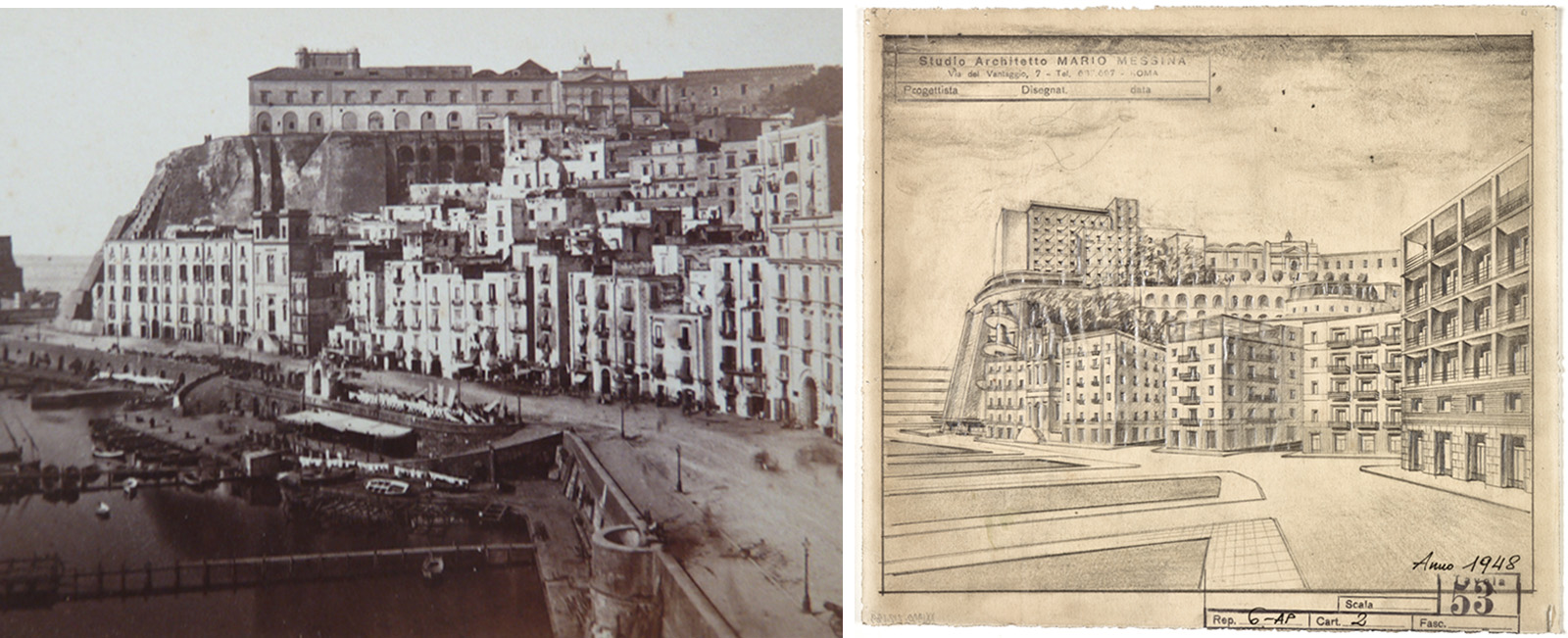
Many drawings also lack concrete identifiers: Messina rarely provided titles or locations, opting instead to use a stamp inscribed "Studio Mario Messina," along with the atelier address, year, and serial number. While this fragmentary record may seem limiting, it is precisely what makes the research exciting. An incomplete archive can still tell a coherent story—if you learn to read what’s missing.
It All Started with a Stamp
To solve a mystery, one should start with the obvious—in this case, the stamp on the design drawings. Thanks to this stamp, we learned that Mario Messina had a professional studio in his name, founded most likely in the 1920s. The studio (which was also his residence, as was common in that time) was based in Rome, on Via del Vantaggio, a famous street in the historic city center that has attracted artists and architects since the mid-19th century.
Those who have studied Italian Novecento architecture will be familiar with the Ordine degli Architetti, Italy’s professional association for architects. After 1938, the organization required every practicing Italian architect to become a member of the Ordine. The institution’s headquarters in Rome was the first place to look for more information about Messina. Their records revealed that Messina was born in 1899 in Naples, Italy—a small detail that became an important clue in helping identify some of his architectural works.
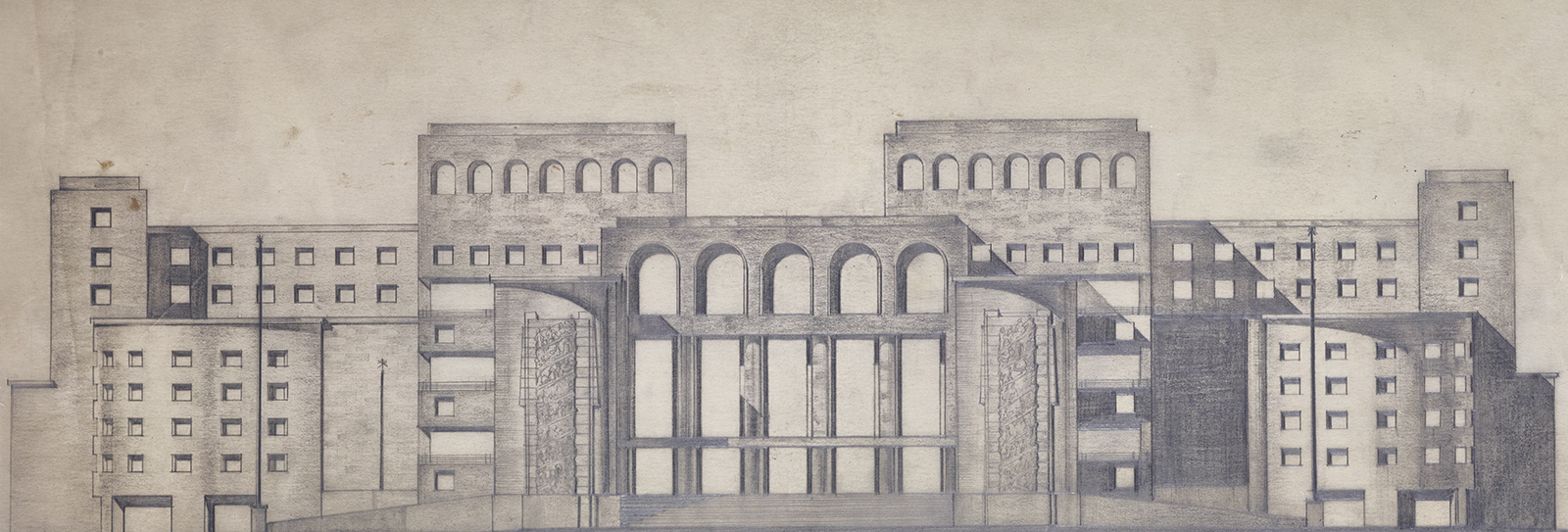
From the same archival materials, we learn that Messina studied at the Naples Academy of Fine Arts, at that time Regio Istituto delle Belle Arti. A visit to the Academy’s archives in Naples reveals that Messina was admitted in 1912, but because of the First World War, his studies took longer than anticipated and he graduated in 1921. Soon after, he moved to Rome to begin his professional practice, which in the mid-1920s included a collaboration with his father-in-law, the prominent Roman architect Armando Brasini.
Further archival findings uncovered the second phase of Messina's international career after the Second World War in Morocco. He managed studios in Tangier and Rabat, where he worked on both residential architecture and larger scale projects. This expanded biography proved key in identifying and dating many of Messina’s otherwise anonymous drawings, especially in the postwar period.
Surroundings Are Key
As for Messina’s recently discovered origins, several drawings from 1948, such as his project for a seaside restaurant, include Mount Vesuvius, placing these projects in Naples and focusing on the city’s waterfront.
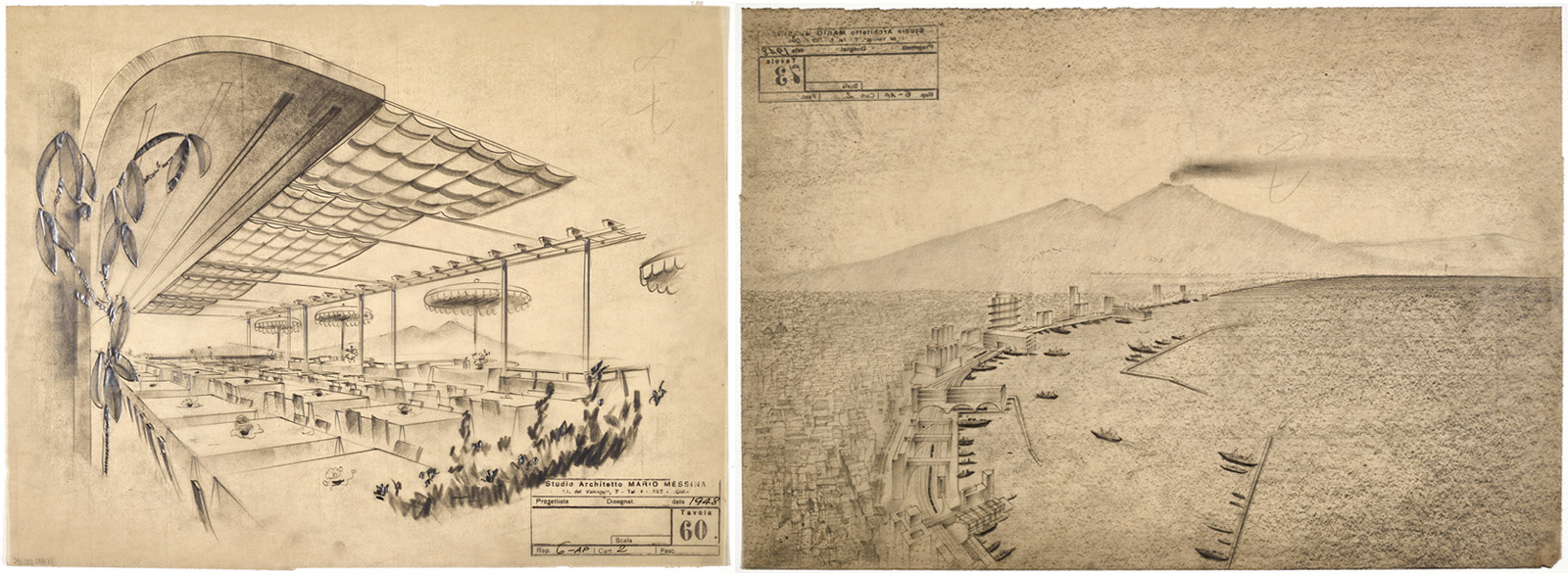
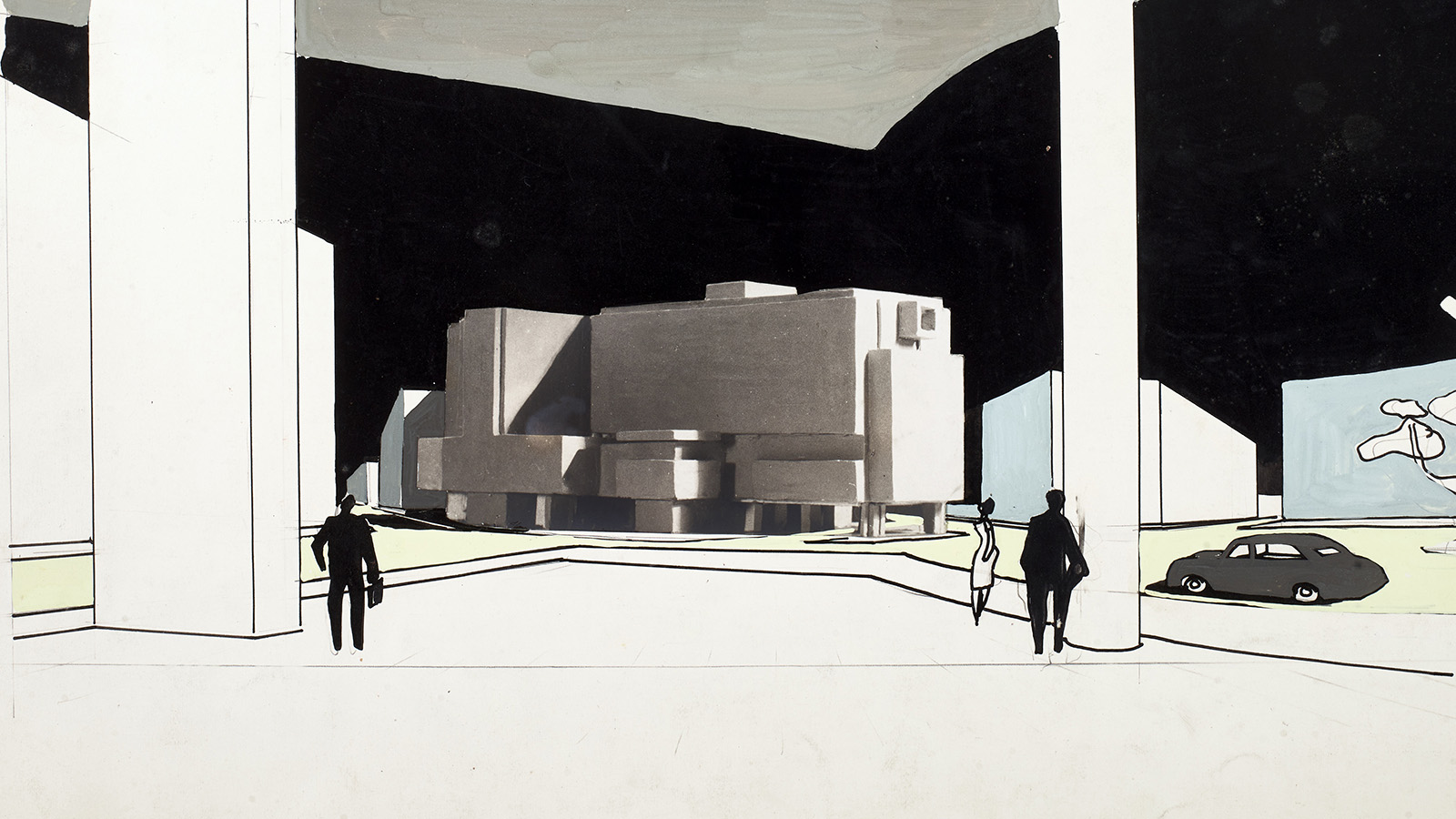
Among them is a group of previously unmarked designs depicting a monumental angular structure, which appears to be a parking and residential complex.
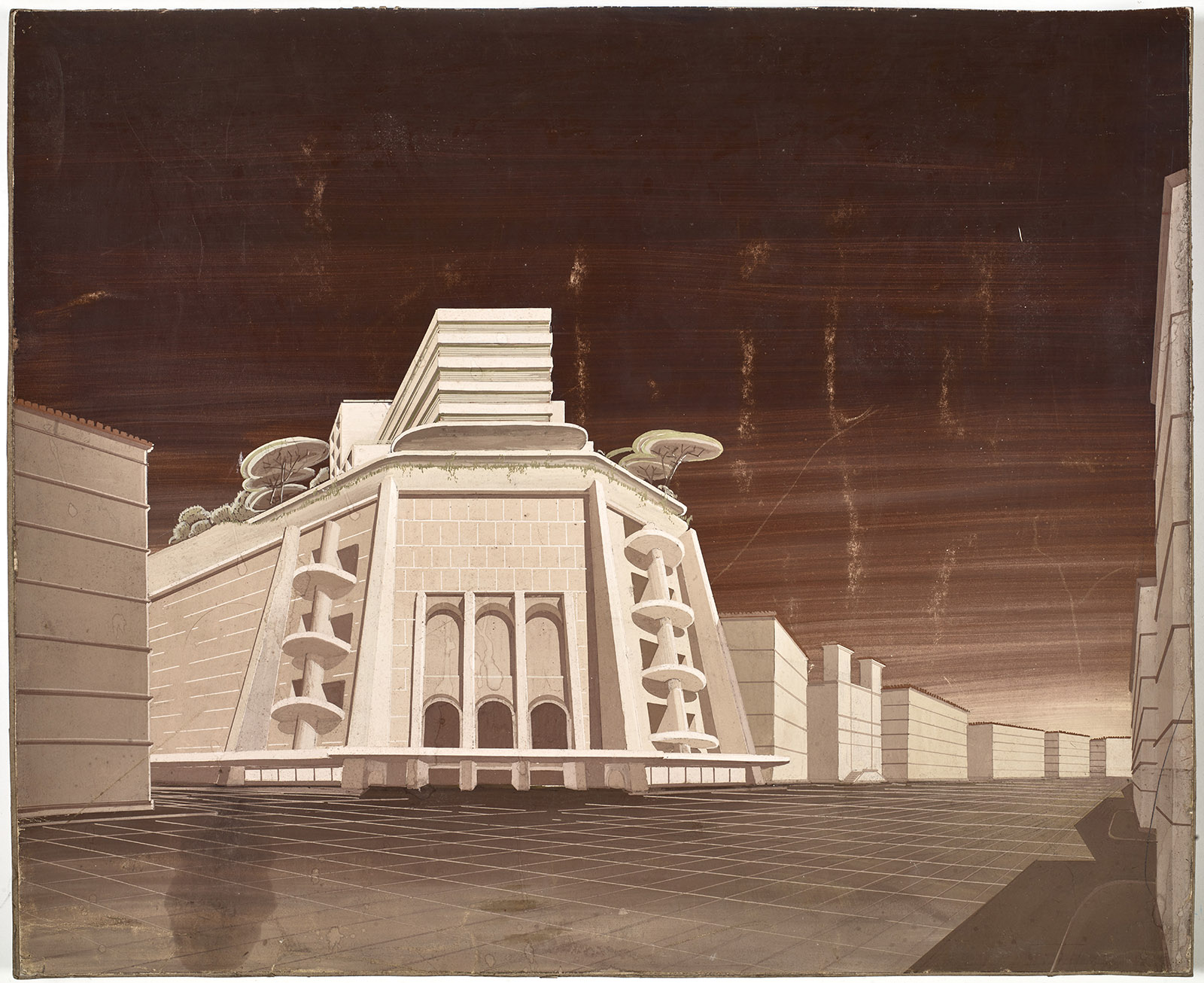
The surrounding architectural features in these drawings, among them the Castel dell'Ovo and the church of Immacolatella in Pizzofalcone, situate the project at Monte Echia—a historically significant site long associated with urban development. After heavy bombing in 1943 caused the hill to partially collapse, the area became the focus of new construction proposals in the postwar years. It is likely that Messina elaborated his own proposal in a series of drawings now identified as the transformation of Monte Echia area in Naples for this purpose. However, neither Messina’s drawings, nor anyone else’s submissions, were ever realized, and the site remained in a state of disrepair for decades without any consideration.
Within this context, Messina’s drawings can be understood as part of broader efforts to rethink Naples’s infrastructure and coastline. More broadly, they show how piecing together fragmentary evidence can place otherwise unidentified works within a specific place and historical period.
The reader will notice a pattern: the more answers gathered, the more questions emerged. What once appeared as previously scattered pieces of information now becomes a portrait of an architect, drawn in broad brush strokes, yet grounded in documented evidence, suggesting how further systematic research can lead to more precise interpretations. While we still do not know why Messina is underrecognized today, this research begins to fill some of the gaps in our understanding of his life and work.
The only known collection that reveals Messina’s design method and artistic thought, The Wolfsonian’s archive offers a unique perspective on his place within the architectural landscape of the first half of the 20th century. It illustrates how the architect navigated a variety of stylistic approaches, cultural and geographical contexts, as well as his ability to design for different scales—from temporary structures to post-war reconstructions. While the archive creates opportunities for monographic study, it also reveals potential for broader research topics, such as the history of urban transformations in Italy and abroad, the role of architecture as a means for international cultural exchange, and the preservation of built heritage.
About the Author
Mariia Babicheva is an art and architectural historian. Her research focuses on Italian architecture of the first half of the 20th century. In 2024, she researched Mario Messina's personal archive through a collaborative initiative between The Wolfsonian–FIU and the University of Rome Tor Vergata.