
March 30, 2026
By Hannah Gaulthier, Digitization Specialist
In the years between the world wars, Paris and New York pulsed with artistic experimentation. Nightclubs, salons, vaudeville houses, and publishing studios were laboratories for collaboration. Within this cosmopolitan world, illustrator Frank MacCoy "Mac" Harshberger (1901–1975), and musician and composer Harry Gye "Holland" Robinson (1890–c. 1950) formed a dynamic, lifelong partnership that bridged the Pacific Northwest, Parisian modernism, and New York theatrical enterprise.
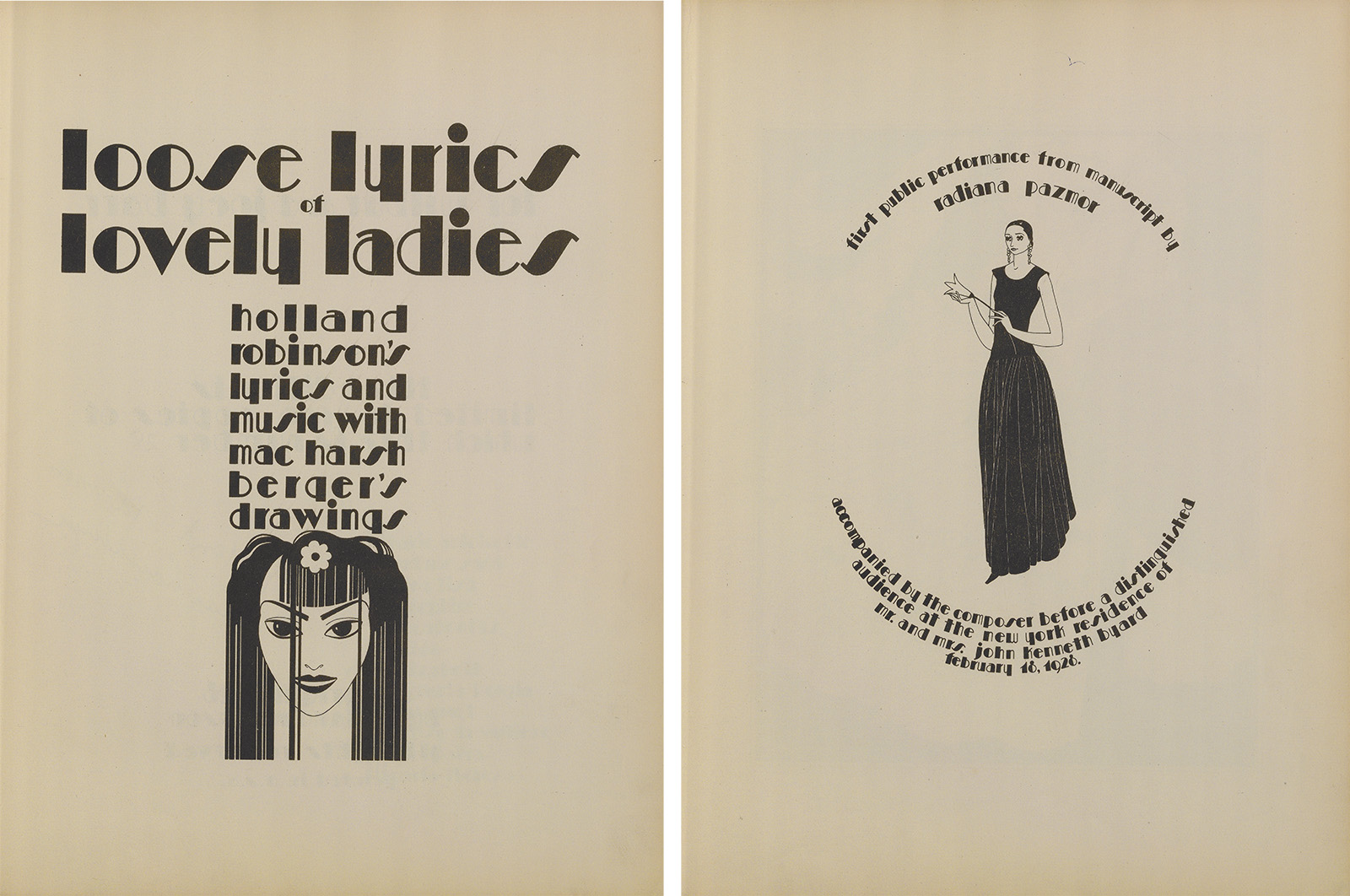
Harshberger and Robinson's song cycle Loose Lyrics of Lovely Ladies offers a window onto the influences that shaped their lives and careers. Each of the 12 songs in the sequence is devoted to a celebrated woman from history: Marie Antoinette, Helen of Troy, Empress Josephine, Cleopatra, and others. These figures are not odes to the past; they are theatrical personas, refracted through the lens of 1920s stage culture.
Setting the Scene
Although it's unclear how they met, Harshberger and Robinson crossed paths in Washington state, where Harshberger grew up and Robinson had made a name for himself in vaudeville, a type of traveling theatre. In 1921, Robinson left the United States for Europe; Harshberger joined him the following year. The men immersed themselves in the artistic life of 1920s Paris, collaborating on many projects, with Robinson composing songs and Harshberger illustrating the sheet music. By 1925, they had settled back in New York City, where they established their creative company, Robinson-Harshberger Productions.
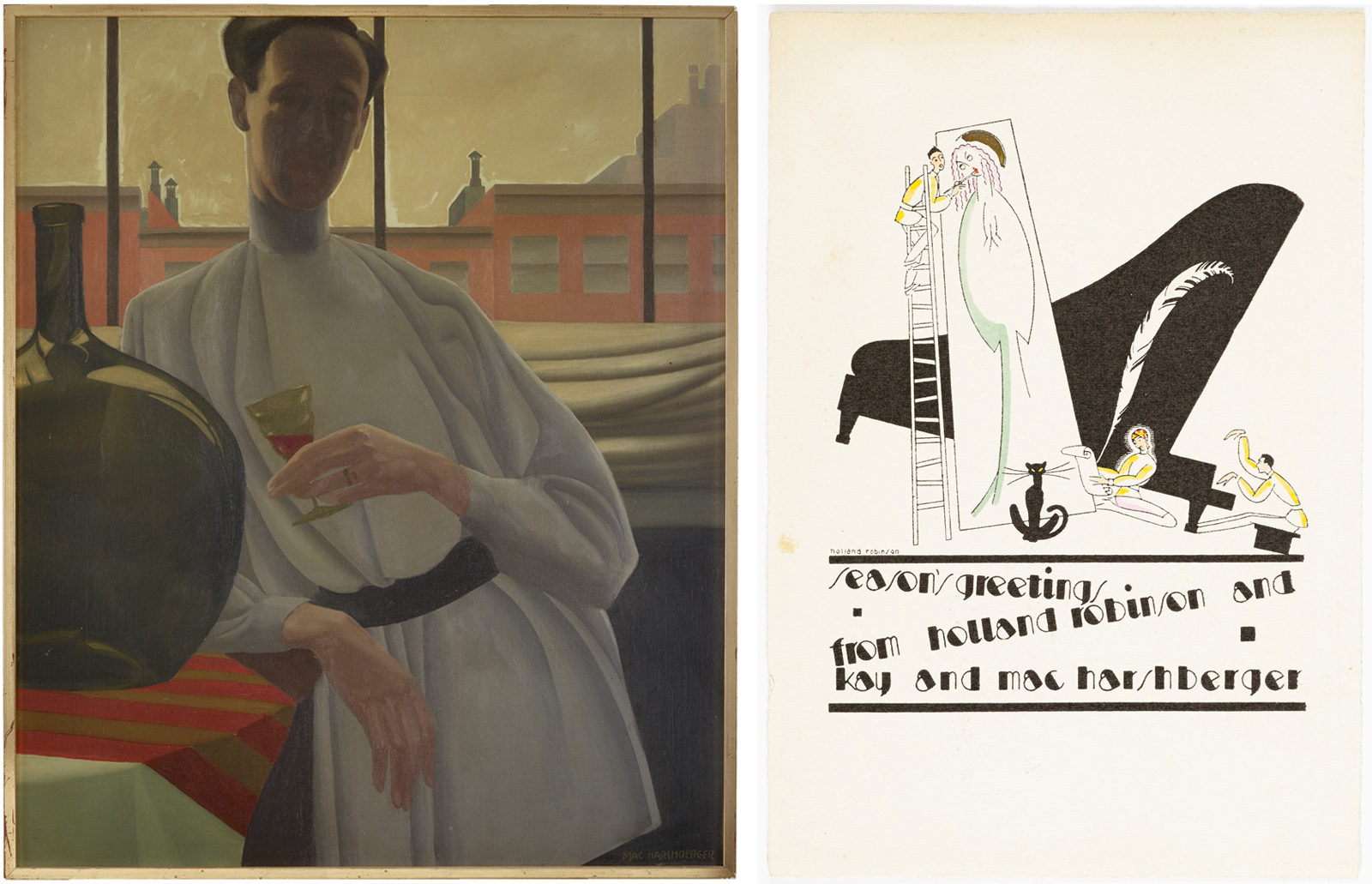
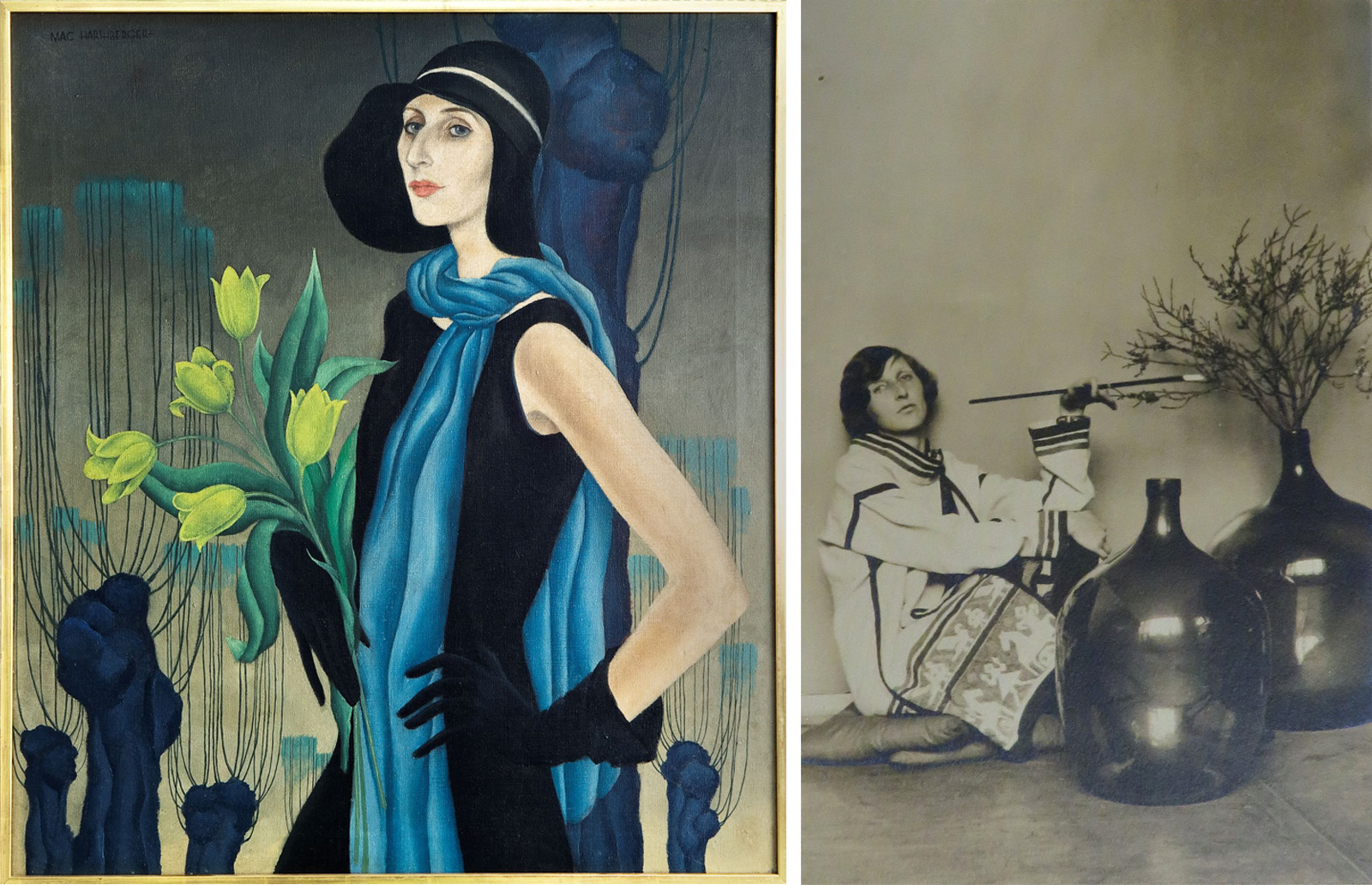
Two women played significant roles in Harshberger and Robinson’s lives and careers. Kay Harshberger (1893–1974), Mac's sister, was a writer, collector, and patron who helped enable the group's European ventures. She collaborated directly with Robinson as lyricist for works such as Zoological Soliloquies (1926) and Travelogue Tales (1927), bringing a literary wit that anticipates the playful tone of Loose Lyrics of Lovely Ladies.
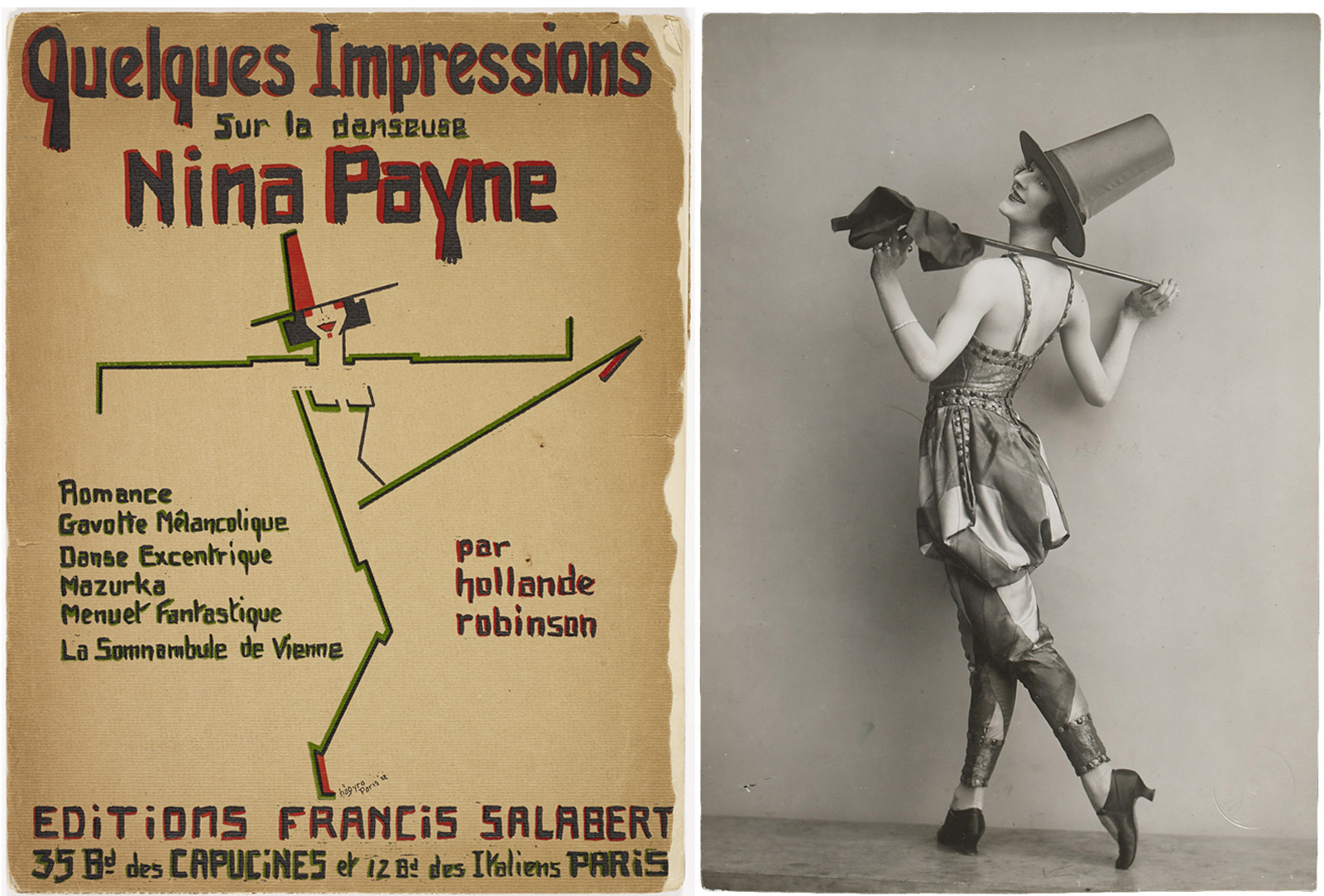
Nina Payne was another central figure in the pair's lives. An avant-garde dancer who performed at venues like the famous Folies Bergère, she became known for her futurist dances and elaborate costumes. Robinson and Payne met in Washington, forming a successful vaudeville partnership. Traveling with Robinson to Paris, Payne quickly made a name for herself in Europe, sometimes performing dances to Robinson's musical accompaniment and in sets and costumes he designed.
Robinson dedicated "Josephine" (originally styled in lowercase) to Payne, a song about the trend-setting French empress Joséphine de Beauharnais. Payne's bold stage history provides an illuminating backdrop for Loose Lyrics, suggesting how Robinson might have understood femininity as something composed, staged, and musically characterized.
Music and Lyrics
While no contemporary recordings of the songs are currently available, we can learn a great deal from studying the music itself. Robinson composed Loose Lyrics at the end of the Impressionist era of music, drawing on its emphasis on mood rather than literal representation. There are also elements of Parisian nightclub songs, themselves heavily inspired by American jazz music. Seventh and ninth chords (harmonies that add expressive color beyond simple three-note chords) create a lush, slightly unstable resonance associated with jazz, cabaret, and Impressionist music.
Unlike more experimental Impressionist works, however, Loose Lyrics remains tonal. That is, each song gravitates toward a central key or "home" pitch, providing structural grounding. The result is sophisticated but accessible.
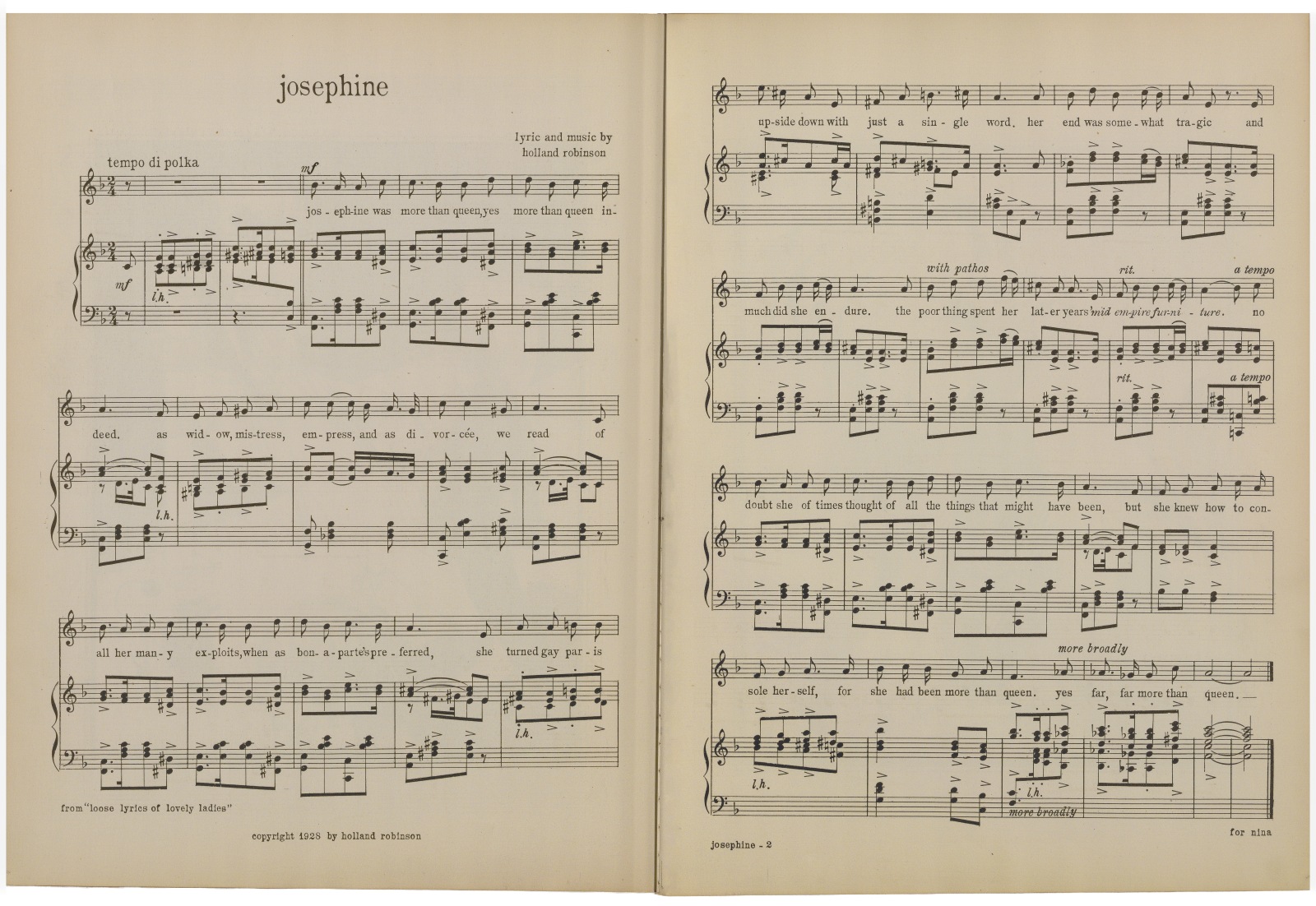
Robinson peppers the cycle with recognizable references: fragments of "La Marseillaise," in "Josephine," gestures elsewhere reminiscent of Liszt or Chopin, and even echoes of Johann Strauss Jr. These quotations function as musical inside jokes, aligning each historical figure with a distinct sonic personality.
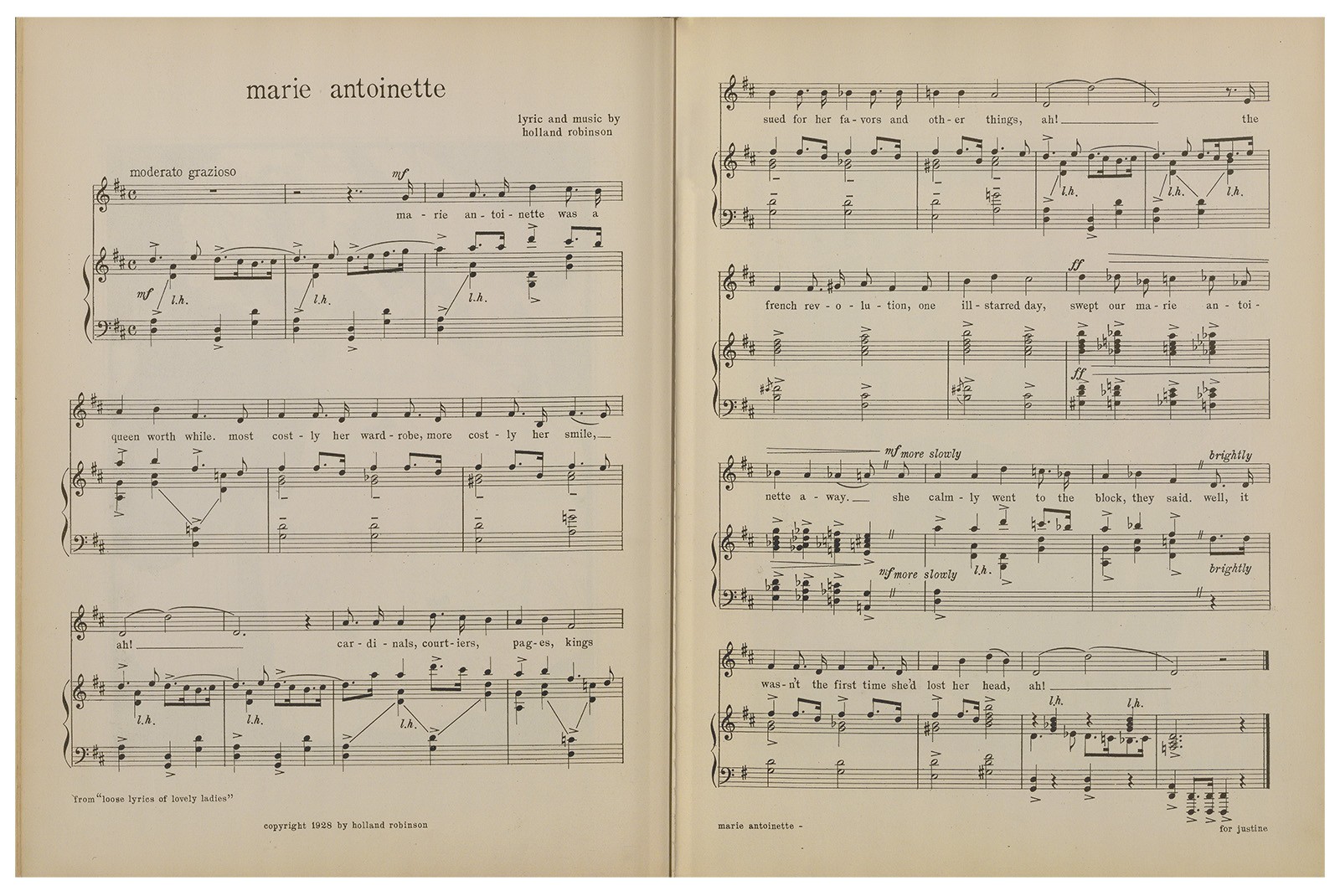
The lyrics, too, lean into theatricality, using double entendre and exaggeration to transform historical figures into modern archetypes. Rather than reducing them, Robinson animates them as performers within his cabaret-like musical frame. In "Marie Antoinette," for example, Robinson blends wit with irreverence:
Marie Antoinette was a queen worth while.
Most costly her wardrobe, more costly her smile, ah!
Cardinals, courtiers, pages, kings
Sued for her favors and other things, ah!
The French Revolution, one ill-starred day,
Swept our Marie Antoinette away.
She calmly went to the block, they said.
Well, it wasnʼt the first time sheʼd lost her head, ah!
Illustrations
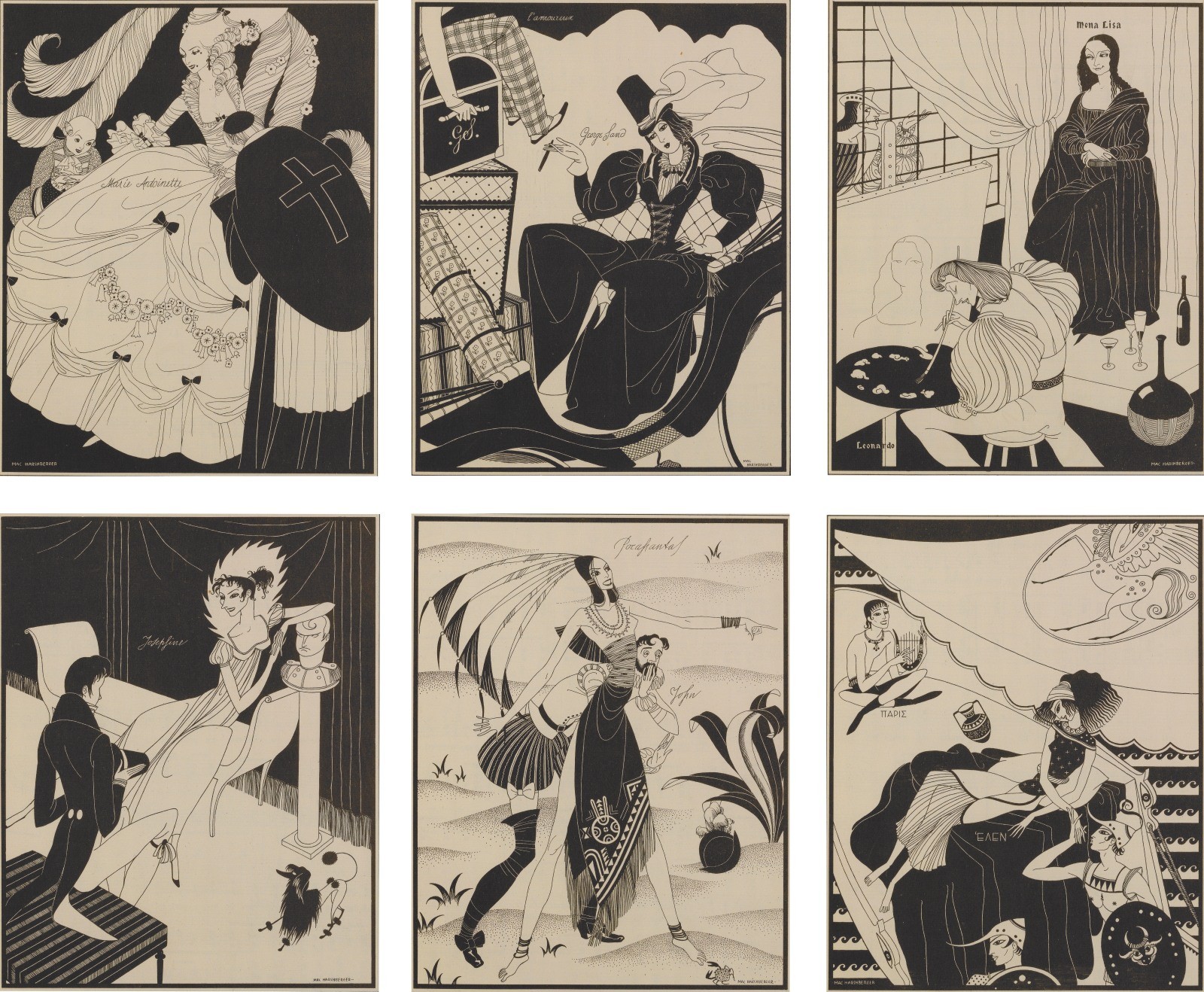
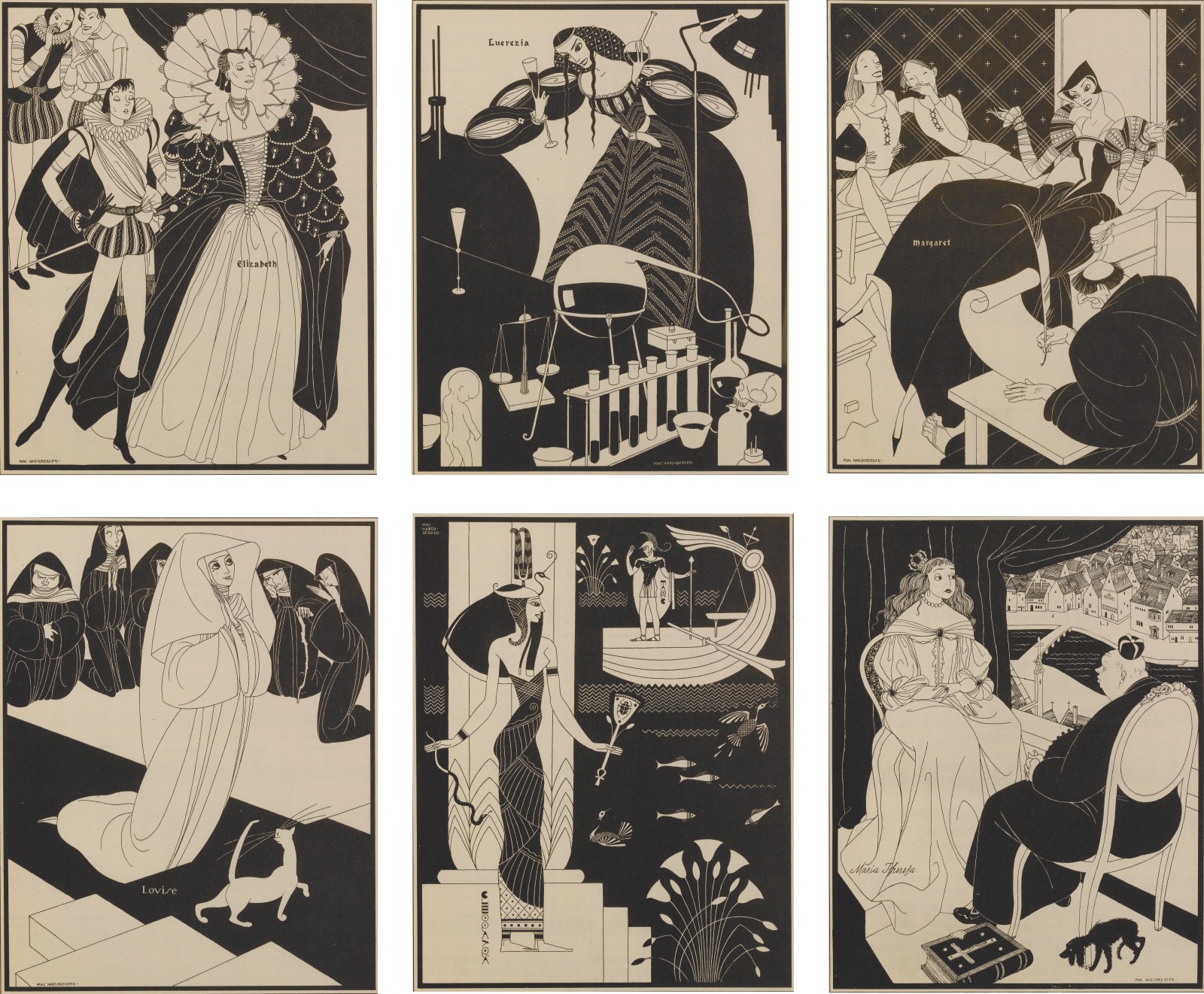
Alongside each of Robinson's Lovely Ladies songs is a Harshberger illustration. Harshberger's Art Deco line transforms these women into modern icons. The visual language mirrors Robinson's harmonic language: refined, playful, and cosmopolitan. In "Josephine," for example, Harshberger contrasts the image of the grand empress with the casualness and sharpness of a modern 1920s woman.
Ultimately, Loose Lyrics of Lovely Ladies is more than a clever 1928 song cycle. It is a snapshot of an artistic world that thrived on movement. Through wit, harmonic color, and striking illustration, Robinson and Harshberger crafted a work that embodies the cosmopolitan experimentation of their era. Within the Wolfsonian archive, their collaboration stands not simply as ephemera, but as evidence of a richly interconnected modernist era, in which music, image, gender, and identity were all composed anew.
The Wolfsonian preserves a remarkable archive of works by Mac Harshberger and his sister Kay Harshberger, as well as collaborative works by Mac and Holland Robinson. See them in our digital catalog.
About the Author
Hannah Gauthier is The Wolfsonian's digitization specialist. She studied music and theatre at DePauw University and earned graduate degrees in vocal performance from the University of North Florida and in Library and Information Studies from Florida State University. She has held roles in both academic and public libraries. Hannah also sings opera, enjoys John Waters films, and is trying her best to learn Spanish.